The EO Excellence Award, launched by the European Space Agency (ESA), celebrates outstanding achievements by early-career researchers who are advancing the innovative use of Earth observation (EO) data 🛰️.
The Award recognises scientific excellence and supports promising researchers whose work contributes to a better understanding of our planet and demonstrates the value of Earth Observation in addressing climate change, environmental challenges, and societal needs.
For the 2027 edition, there will be two individual winners, each receiving a grant to advance their research: one for a researcher from an ESA Member State and one for a researcher from a country outside Europe.
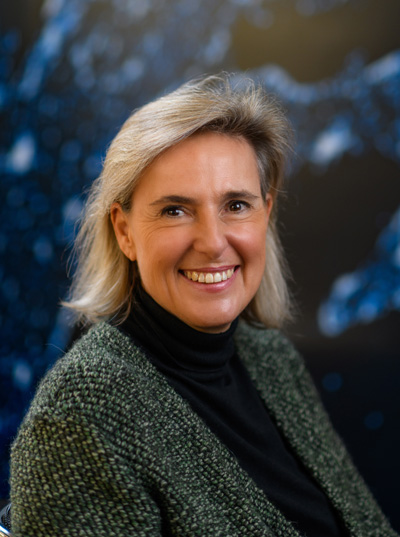
It is a pleasure to launch the sixth edition of the EO Excellence Award, celebrating the creativity, dedication and scientific excellence of using Earth observation to deepen our understanding of our planet. Earth observation datasets are opening new avenues for discovery, enabling innovative approaches and helping to address some of the most pressing environmental challenges of our time. Through this Award, we are proud to recognise researchers whose work is advancing the frontiers of Earth observation.
Simonetta Cheli
Director of Earth Observation Programmes, ESA
Who are we looking for?
Early-Career Researchers
You are within five years of obtaining your highest academic degree (MSc or PhD) and no more than ten years from your first degree (BSc).
EO Scientists
Your research uses Earth Observation satellite data to advance science and applications and contributes to a better understanding of our planet.
Innovators
Your work demonstrates original and innovative ideas, methods or approaches and pushes the boundaries of Earth Observation research.
Impact Makers
Your work has the potential to shape the future of Earth Observation, driving new scientific discoveries, applications and approaches.
Advancing Excellence: Grants Opportunities 🚀
The EO Excellence Award will provide two grants of up to €15,000 each:
One grant for an outstanding individual based in an ESA Member State
One grant for an outstanding individual from a country outside Europe
Explore the ESA EO Science Strategy Themes
Applicants are invited to identify one or more of the following overarching scientific themes (STs) within ESA’s Earth Observation Science Strategy that are most relevant to their project:
💧 THE WATER CYCLE
🌿 THE CARBON CYCLE AND CHEMISTRY
☀️ ENERGY FLUXES
🌱 ECOSYSTEM HEALTH
⚠️ EXTREMES AND HAZARDS
🔄 INTERFACES & COUPLING IN THE EARTH SYSTEM
For more information, please check our Terms and Conditions
The call for self-nominations opens on 20 October 2026 at 12:00 UTC and closes on 22 January 2027 at 23:59 UTC
The EO Excellence Award is back! Early-career individuals are invited to showcase their outstanding achievements and innovative work in the use of Earth Observation data and/or methods.
Think your work has what it takes? Show us how you are shaping the future of Earth Observation🌍.
Individual 2026: Isabel Caballero, Spanish National Research Council (ICMAN-CSIC), Spain
Isabel Caballero’s award-winning project, IMCOAST, uses Copernicus Sentinel-2 satellite data to improve the monitoring of coastal areas. Her work supports better understanding of water quality, harmful algal blooms, coastal erosion and the impacts of extreme events.
Individual 2025: Marcello Passaro, Technical University Munich (TUM), Germany
The research of Dr Marcello Passaro focuses on developing and applying techniques to enhance the quantity, quality and usability of satellite altimetry data for sea level and sea state studies, with a particular emphasis on coasts.
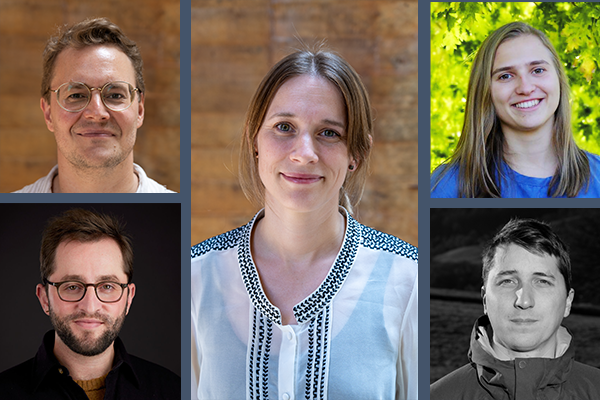
Team 2025: Lina Eklund, Jamon Van Den Hoek, Marie Schellens, Corey Scher, Eoghan Darbyshire
The Decentralised Damage Mapping Group (DDMG) uses Earth observation datasets to assess damage in conflict and disaster-affected regions. DDMG develops novel Earth observation methodologies to rigorously assess the impacts of wars on the environment.
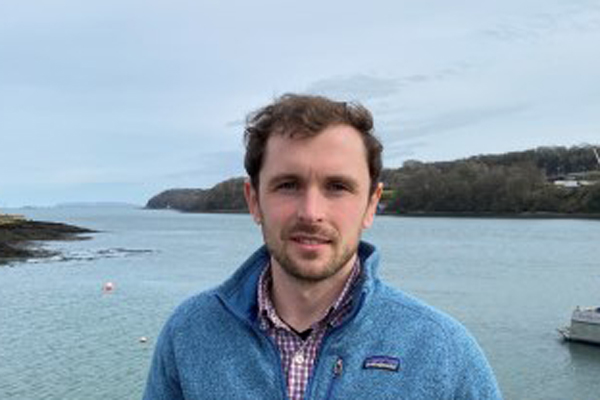
Individual 2024: Iestyn Woolway, Bangor University, Wales, United Kingdom
Iestyn’s work focuses on the physics and hydrology of lakes worldwide and their links to climate using space-based observations combined with in situ data and modelling to measure water temperature, evaporation, and ice cover.